
Coloring as a Tool for Intergenerational Communication: Family Bonding through Science
1. The Digital Era: Bridging the Increasing Generational Distance
As smartphone use and individual media consumption grow, opportunities for different generations to interact, even when in the same room, are steadily decreasing. Awkward silences often dominate family gatherings on holidays or weekends. To resolve this 'generational disconnect,' we don't need grand events; we need a 'shared activity' where everyone can participate at the same level and create something together. Coloring stands out as one of the safest and most heartwarming tools for this essential communication, providing a low-pressure environment for connection.
2. A Visual Universal Language: Opening the Door to Dialogue
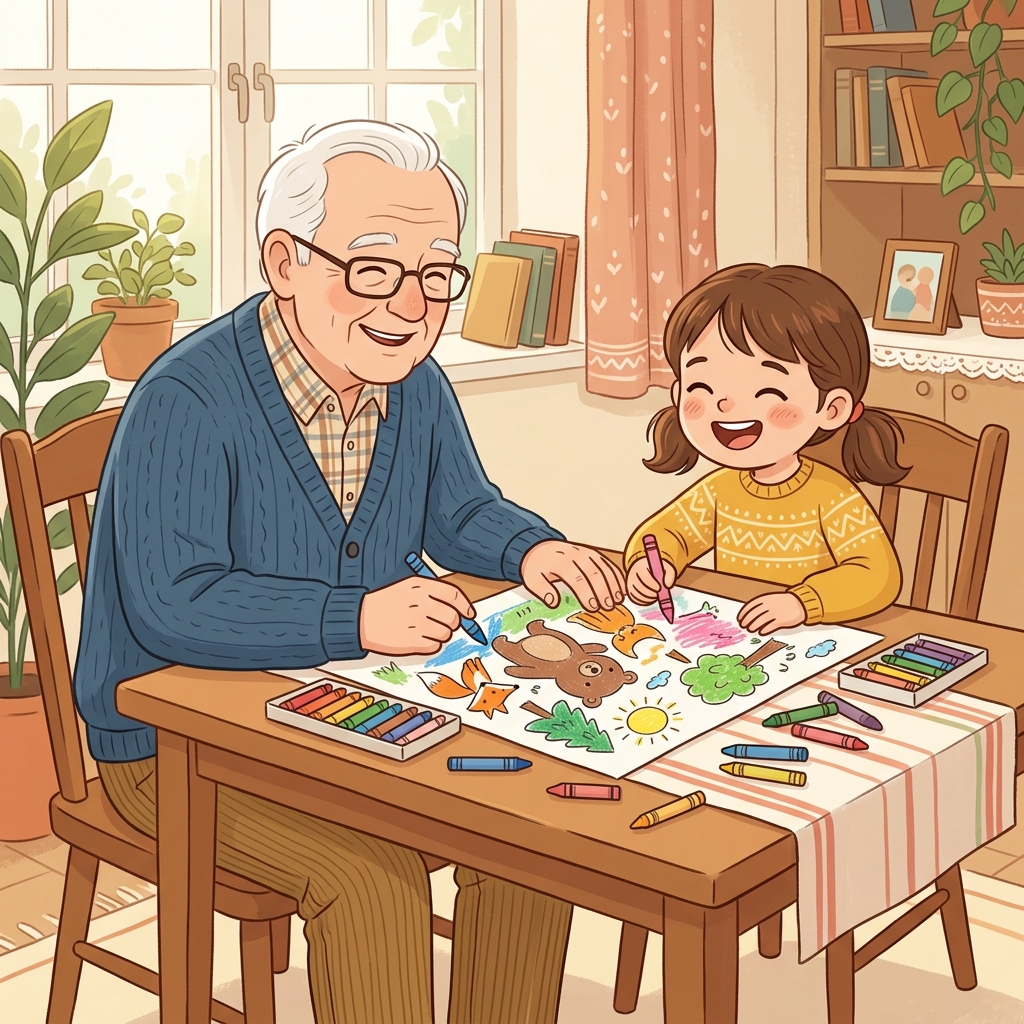
For young children and seniors, coloring serves as an excellent mutual medium. A child's question, "Grandma, what color should I use here?" becomes a joy for the grandparent to share their perspective and a moment for the child to experience wisdom. Beyond linguistic barriers or knowledge gaps, the simple act of coloring the same page together releases 'Oxytocin,' the hormone responsible for attachment and trust. The physical closeness and synchronized movement toward a common goal constitute a powerful bonding process in itself.
3. A Place for Mutual Learning: Rediscovering Each Other
Shared coloring evokes a psychological effect known as 'Joint Attention.' Grandparents are often surprised and inspired by a child's bold and creative color choices, breaking their own conventions, while children learn respect by observing their grandparents' precise and patient hand movements. This process of observing and praising each other's strengths provides 'social presence' for grandparents and 'stable emotional support' for children, fostering a healthy culture of mutual respect and admiration within the family unit.
4. A Positive Cycle of Cognitive Ability: Brains Supporting Each Other
Scientific studies show that when seniors engage in cognitive activities with grandchildren, their 'Cognitive Reserve' operates significantly more actively. The psychological motivation to explain things and set an example for children stimulates brain function. Conversely, children naturally acquire the 'aesthetics of waiting' and the 'value of immersion' from their grandparents—lessons often omitted in fast-paced digital environments. This transcends mere play, becoming a profound educational moment for both parties involved.
5. Common Interests Converging through AI Technology
AI Coloring Book: To Me ensures that family conversation topics never run dry. You can combine a grandchild's favorite modern dinosaur design with a vintage landscape from a grandparent's memory, or use AI to transform the entire family into fairytale characters. When a child says, "Grandma, look! The AI made Grandpa a hero!", unfamiliar digital technology morphs into a source of laughter and shared joy. Technology should not be a cause of isolation but a bridge that reinterprets family history in a modern, engaging way.
6. Conclusion: Future Chronicles of Family History in Color
A coloring piece completed after a day together is more than just a piece of paper. The space where a grandparent's wrinkled hand met a child's small hand is like a precious diary entry recording family time. This evening, turn off the TV for a moment, gather everyone around, and start coloring with AI Coloring Book: To Me. Those accumulated moments will form an unforgettable, colorful tapestry of memories that your family will treasure for years to come, securing a legacy of love and creativity.