
The Science of Coloring and Dementia Prevention: Coloring for Senior Brain Health
1. Coloring as a Non-Pharmacological Intervention
As we enter an aging society, dementia has emerged as a significant social challenge. Recent medical research focuses on 'non-pharmacological interventions' that stimulate brain plasticity alongside medication. Among these, art activities—specifically coloring—are highly accessible and proven effective. While it may look like simple play, complex neuroscientific mechanisms are at work. Color selection and space recognition involve high-level cognitive processes that keep the mind sharp and active.
2. Visual-Motor Coordination and Prefrontal Cortex Activation
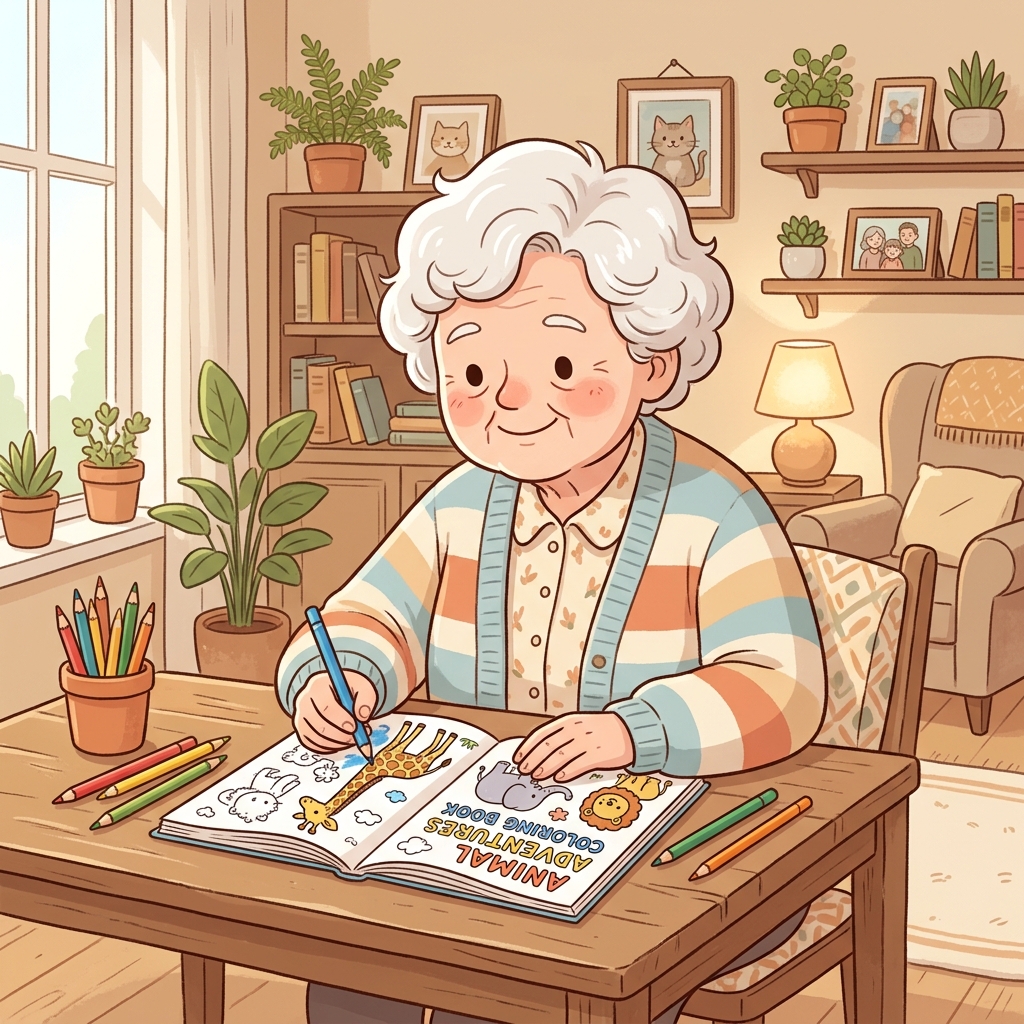
Using fine motor skills to color stimulates the prefrontal cortex, which is responsible for 'Executive Function.' When seniors identify narrow sections and precisely control their wrist and finger muscles to apply color, their brain performs real-time exchange of visual and motor information. This 'Visual-Motor Coordination' training is crucial for slowing down the degeneration of the frontal lobe and maintaining the ability to perform daily tasks. Regular practice can lead to improved manual dexterity and mental focus.
3. Maintaining Cognitive Plasticity and Strengthening Neural Networks
The brain possesses 'Plasticity,' meaning it maintains or develops further the more it is used. Choosing colors, understanding the overall composition, and attempting to adjust shading induce new synaptic connections between neurons. Specifically, experimenting with bold color combinations or decoding complex patterns helps accumulate cognitive reserve. This infrastructure can significantly delay the progression of dementia symptoms even if they begin to manifest, providing a protective buffer for the aging brain.
4. Emotional Stability and Restoration of the Dopamine System
Early-stage dementia is often accompanied by depression or anxiety. Coloring activities induce a meditative 'Flow' state through rhythmical and repetitive movements. This process reduces cortisol—the stress hormone—while the sense of accomplishment from completing a drawing triggers dopamine, the signal for pleasure. This is remarkably effective for boosting seniors' self-esteem and alleviating emotional isolation, providing a sense of purpose and pride in their daily creative output.
5. AI-Driven Personalized Prevention Solutions
Traditional, uniform coloring books often fail to consider individual conditions such as declining vision or hand tremors. AI Coloring Book: To Me overcomes these limitations using AI technology. By adjusting design complexity based on cognitive levels, thickening lines for better visibility, and generating motifs from personal memories, our AI helps achieve both 'Reminiscence Stimulation' and 'Cognitive Training' simultaneously, offering a truly scientific and personalized approach to elderly care.
6. Practical Brain Health Habits in Daily Life
Dementia prevention starts not with grand treatments but with 10 to 20 minutes of daily joyful cognitive activity. Grab some colored pencils and start coloring while sharing stories with your parents or grandparents. This is the most scientific and heartwarming way to prevent brain aging and ensure a happy, dignified later life. Encouraging this habit can make a profound difference in the long-term well-being of our loved ones.