
The Cognitive Science of Early Childhood Coloring: Why Do Kids Love to Color?
Advancing Cognitive Activity Beyond Simple Scribbling
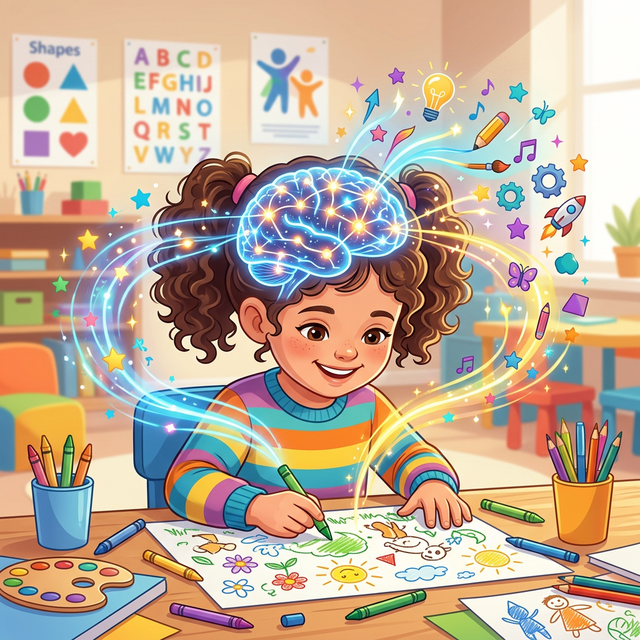
What looks like simple coloring play to adults is actually a period when numerous neural circuits are firing actively like fireworks within a child's brain.
1. Visual-Motor Integration
The process of converting visual information into hand movements develops the frontal and parietal lobes simultaneously. This forms the foundation for using complex tools or learning sports skills later.
2. Brain Training in Selection and Decision
Questions like "Why should I color this flower yellow?" or "What color goes well here?" are some of the first independent 'decision-making' processes children encounter. This develops both logical thinking and aesthetic sense.
3. Emotional Regulation Mechanism
While focusing on coloring, the brain enters a 'flow' state. Numerous studies show that during this time, levels of the stress hormone cortisol drop while serotonin, which aids emotional stability, is released.
4. Correlation Between Fine Motor Skills and Language Centers
Cognitively, the 'development of fine motor skills' through precise finger use is closely linked to the brain's language processing regions. This is why children who use their hands extensively often acquire language more quickly.
5. Dopamine Optimization and Self-Efficacy
The small sense of achievement felt each time a small space is filled stimulates the brain's reward system, releasing dopamine. This sense of self-efficacy—the feeling of "I can do it"—is the primary driver of all learning.
AI Coloring Book: To Me carefully selects and provides designs with optimized visual stimulation, taking these cognitive developmental stages of children into account.